A ban on AI-generated code is really a decision that every line of production code must still be written by hand.
That has a cost most organisations never measure.
It needs a permanent pool of people who can write, read and maintain complex systems unaided. Those people become a concentration risk of their own. They leave. They make mistakes. They aren't always available.
And as systems become more interconnected, even the best engineers struggle to hold the full context. The risk doesn't go away. It just sits somewhere else on the balance sheet.
The opposite extreme fails too: treating machine-generated code as something nobody ever needs to open, like the XML inside a Word document.
We're already close to that in parts of the stack. Most developers never read the assembly their compiler emits. They set constraints higher up, trust the transformation and validate the result.
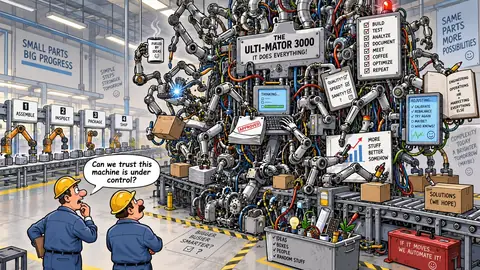
AI changes the conditions. Its output isn't a pure function of the input. It can be non-deterministic, context-sensitive and shaped by data no human has seen. Treating it as opaque only works if the controls around it are strong enough to compensate.
That's the real shift. Control doesn't disappear. It moves to:
- the quality of the specifications
- the strength of the constraints and tests
- monitoring how the system actually behaves
- clear accountability for outcomes
Experience still matters. But it's less about writing every line, and more about defining what "correct" means, spotting drift, and knowing when a human must step in.
So the test is simple. Do you still control what the system does, and is someone clearly responsible when it goes wrong?
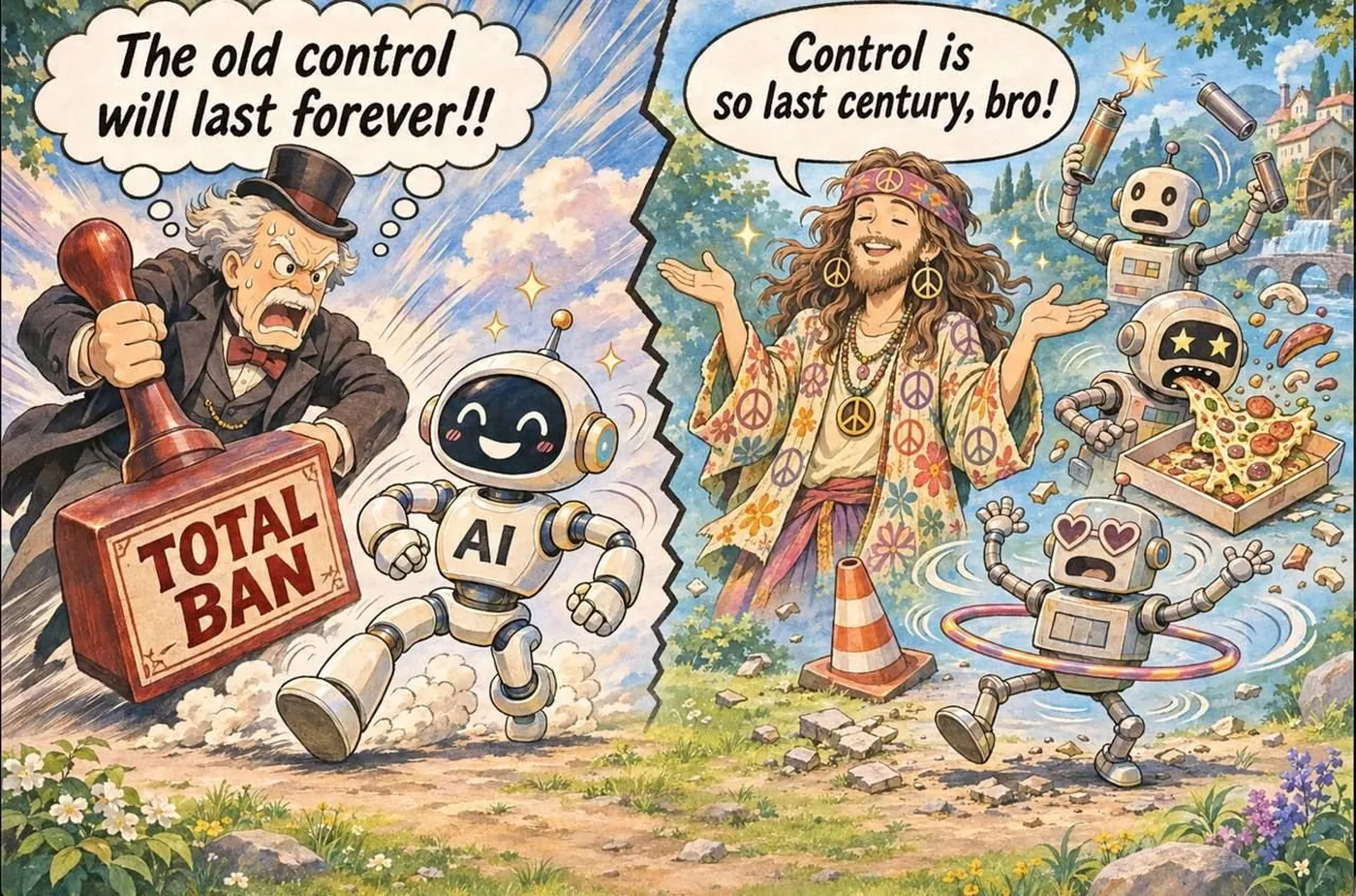
Both extremes fail it. A ban pretends the old form of control can be kept at any cost. Hands-off pretends control is no longer needed.
Where should control sit as AI writes more of our code?