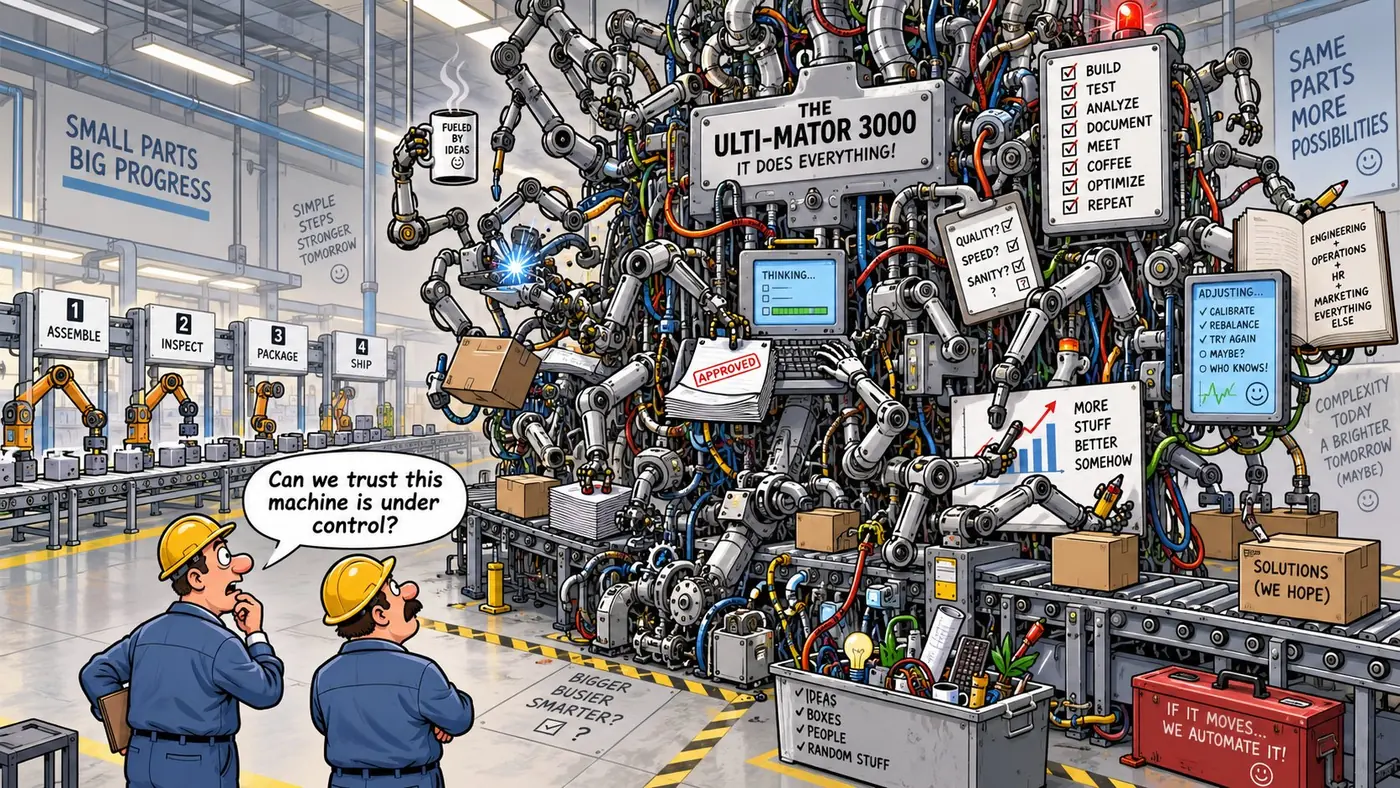
A generalist AI model looks like a service. Architecturally, it is something much stranger: a broadly capable component whose reach must be deliberately constrained.
Enterprise systems are built from parts with contracts: defined inputs, defined outputs, replaceable internals, and a way to fail without taking the rest of the system with them.
A generalist model breaks that assumption. The same model can summarize, code, interpret a contract, generate financial analysis, or invent an answer that convincingly resembles any of them.
Capability is the point. Unbounded behavior is the integration problem.
So the model can stay general. The component around it cannot.
Capability is not authority
Prompting expresses intent. Architecture enforces it.
Decide, in software, which data the model can see, which actions it can take, and which outputs are invalid until a deterministic check says otherwise.
If the boundary lives only in the prompt, you have a hope.
If you cannot pin it, you do not own the process
Enterprises do not run on “the model got better last Tuesday.”
They run on versions, support windows, regression suites, migration windows, and rollback mechanisms that restore prior behavior — including across layers a provider may change without renaming the model.
Change has to happen on your lifecycle, not the provider’s.
If you cannot pin it, test it, and roll it back, you do not own the process.
If you cannot measure failure, you are trusting a demo
Not a benchmark. This workflow. These conditions. This cost of being wrong.
How is quality measured? How is bad output detected? What happens when performance drops below the line?
Small teams can buy much of that wrapper from a vendor, and often should. Critical, regulated, or high-consequence systems cannot outsource responsibility for the wrapper.
The wrapper is the responsibility.
The model may remain enormous, flexible, and generalist. The system around it cannot.