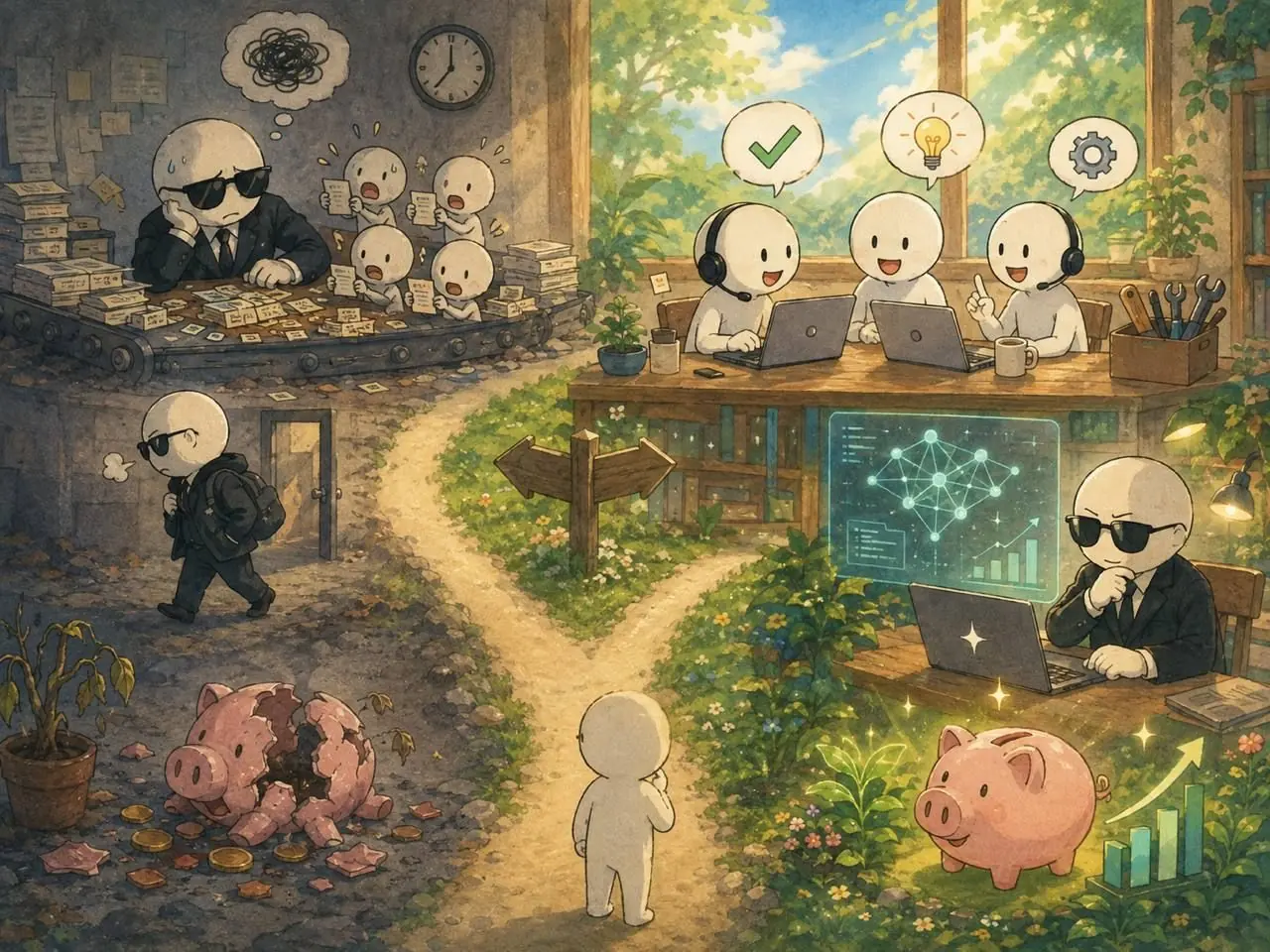
Most companies are staffing AI-augmented support the wrong way.
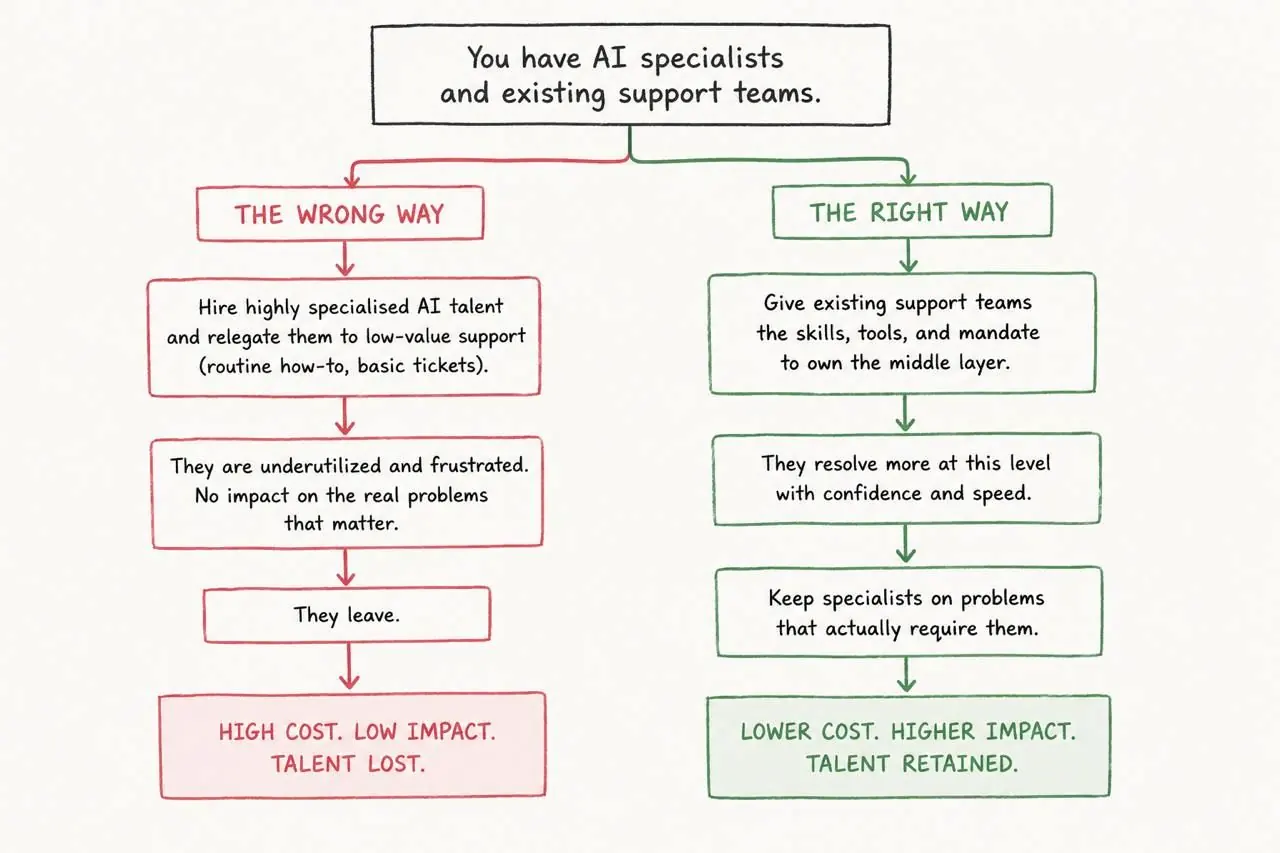
They’re either dumping it on traditional helpdesks that have barely been reskilled, or burning expensive AI specialists on tickets that don’t need them.
One creates permanent friction. The other burns out the people you actually need for harder problems.
Every major productivity platform now ships with AI that can either do the work or walk the user through it. Routine how-to questions are increasingly Tier 0. The AI handles them, or it should.
The real friction sits one level up.
Users still need human help. Most organisations treat this like a one-off training project instead of a continuous support model: a few hours of modules, a prompt list, then silence. Followed by creative metrics to prove the investment worked.
What is required
- Tier 0 — AI. Handles the majority of basic questions and a growing share of the actual work.
- Tier 1 — Human support for the new way of working. The critical layer. Users come here when the AI fails, when they don’t know how to approach the task, or when they need help shifting how work gets done. This should evolve from existing desktop and productivity support teams, not ultra-specialised AI experts.
- Tier 2 — AI and business specialists. Only for workflow redesign, automation, deeper domain expertise, or advanced AI capabilities.
Two realities make this harder than it looks.
The boundary between tiers keeps moving. What needed a specialist last quarter is routine this quarter. Static models lag.
And the usual approach to “upskilling” is theatre. Real capability comes from continuous practice on live work, feedback from actual tickets, updated expectations, and the mandate to help users change how they work. Some existing staff will thrive. Some will not.
Governance, data quality, and security sit underneath every tier. Weak foundations amplify the friction.
Give existing support teams the skills, tools, and mandate to own the middle layer. Keep specialists on problems that actually require them.
Because if you hire highly specialised AI talent and relegate them to low-value support, don’t be surprised when they leave.
The tools have moved. The support model has to move with them — continuously.