Ensuring competencies are available and the last mile has been properly executed are the two major challenges in every IT project I have managed in my career.
Availability challenges could have several meanings here:
- Work is assigned to people lacking the necessary skills.
- Work is assigned to competent people who are already burdened with a pile of critical projects (not just tasks, but projects)
- Work is just ignored.
When you start gaining some hands-on experience, you can detect this quite quickly. The problem is that I have found teams often prefer to "let it go" until the situation becomes critical, reacting usually too late—after too much money has been spent and/or too much work needs to be redone.
What worked for me when I was involved in such situations is:
- Start writing down very factual, clear, concise, and frequent reports. This can be crucial for transparency and accountability when addressing issues. Consider this could be used as evidences if things blew up very badly (that is, lawyers are requested to come...)
- If you are given the power, fire suppliers and stakeholders without hesitation, or if you can't, reorganize by assigning them tasks according to their capabilities.
- If you've tried the above, exiting may be the best solution to avoid being drawn into a problematic situation.
Now, I mentioned the second challenge: the last mile. This assumes that availability is not an issue and the project is close to completion.
In my experience, this is where no project management tools can keep pace. Things become highly complex with lots of moving parts everywhere, and only those with strong hands-on experience—who can manage countless details quickly, understand who can do what, and handle multiple dependencies in parallel—can effectively navigate this phase, especially in enterprise-level projects.
Said differently, the last mile is essentially the sum of all the right decisions minus the bad decisions made during the project to reach an acceptable state.
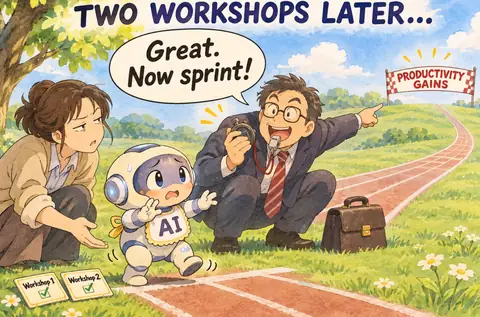
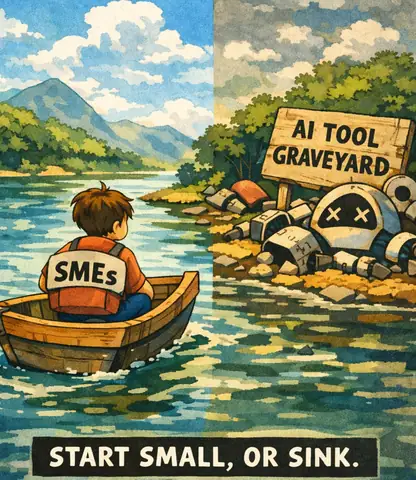
Which is why I am not surprised to read articles here and there that "technologies like Generative AI haven't delivered on their promises".
What they didn't say is stakeholders were promised that a simple API integration would be enough, with limited tests and value provided right away.
In short, those stakeholders believed it was "magic" and forgot about the brilliant basics of IT projects.