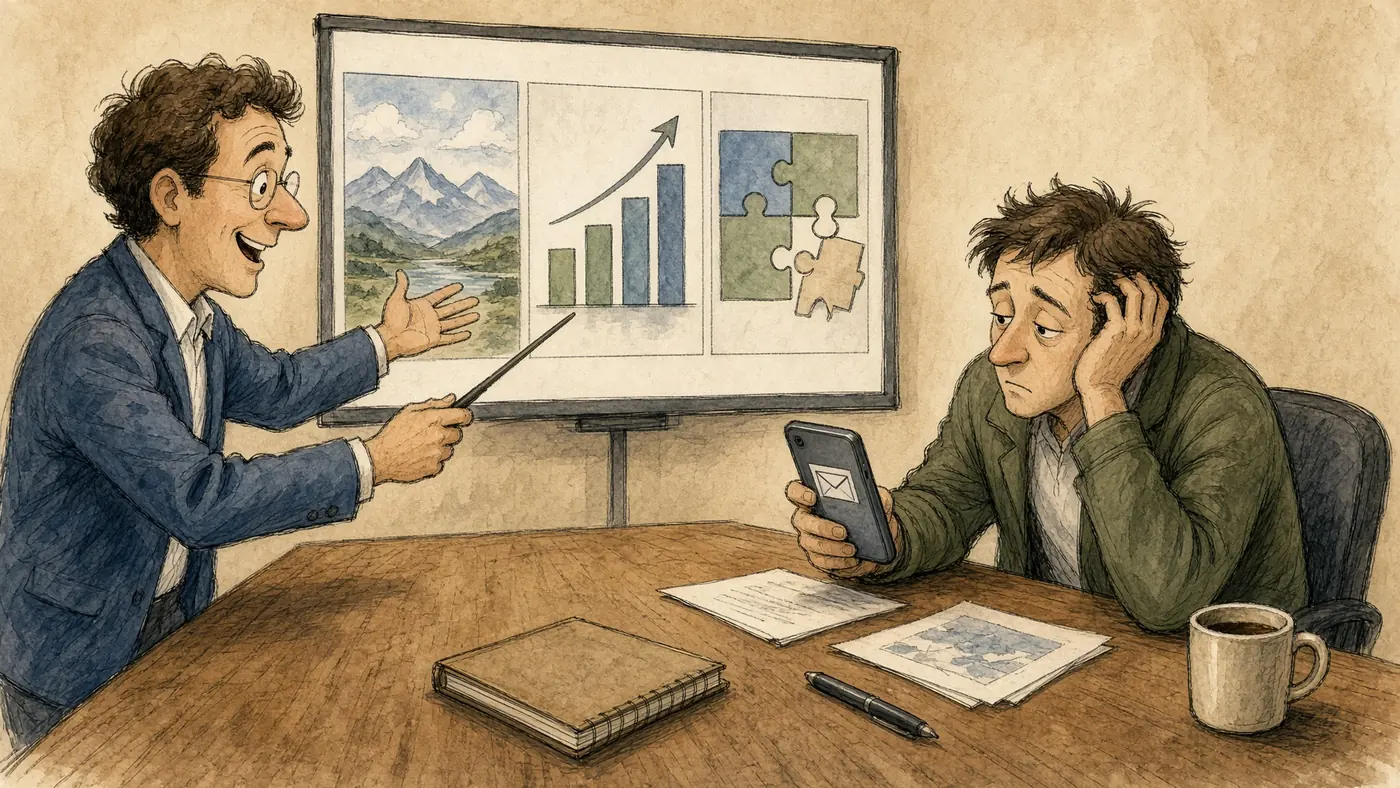
I’ve watched salespeople read their slides while prospects read their email. Or worse.
When something complex needs to be explained, it has to be broken into pieces so the audience can follow and won’t multitask. That does not mean animating the deck like a chase scene. It means everyone is looking at the same thing at the same time, so the message lands.
This takes time. It is information architecture — how the message is structured — and aesthetics. If the slide looks raw, attention drops. Just enough movement to guide the eye, not enough to distract.
Before language models, this kind of slide sometimes took weeks. The “after” changes the pace.
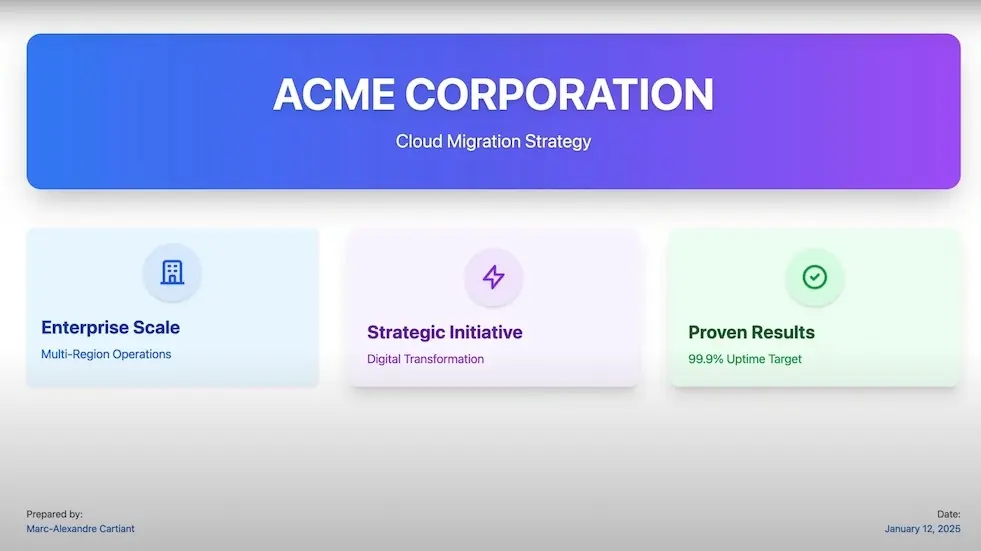
The piece I have in mind was an assignment for an IT company, done in a few days: how to present a cloud migration. Not a glamorous theme. I dumped what I knew, then shaped it with ChatGPT. From there I recreated the deck by having the model design and structure the whole thing. Technically the output is a site that runs locally, with my own shortcuts.
We worked the details: highlights, layout, colors that looked finished. None of the default templates in PowerPoint or Keynote came close. I would show it to a prospective customer.
In this case I own the output. It is built on my expertise. I wouldn’t be surprised if, today, such assignments could be done end to end with barely any human thinking at the start. That is the beginning of the end for offline assignments — unless a real conversation happens around the slides.
A sales pitch without a conversation is a waste of time for everyone.
If the models help present the message, salespeople have no excuse not to articulate it around the prospect’s pain. If they can’t, sending a video would be better.