One of the most surprising discoveries when deploying large language models for real use is variability in judgment.
When we first used them to support risk mitigation in contracts — the model revising clauses directly — getting the prompt right was only part of the battle.
The initial assumption was: if it worked once, it will always work. In reality, the same input could generate a different quality of output.
Providers make this worse by the pace of updates. You might think you are using one named model. That label can refer to different sub-versions over time, changed for speed, cost, or some other goal.
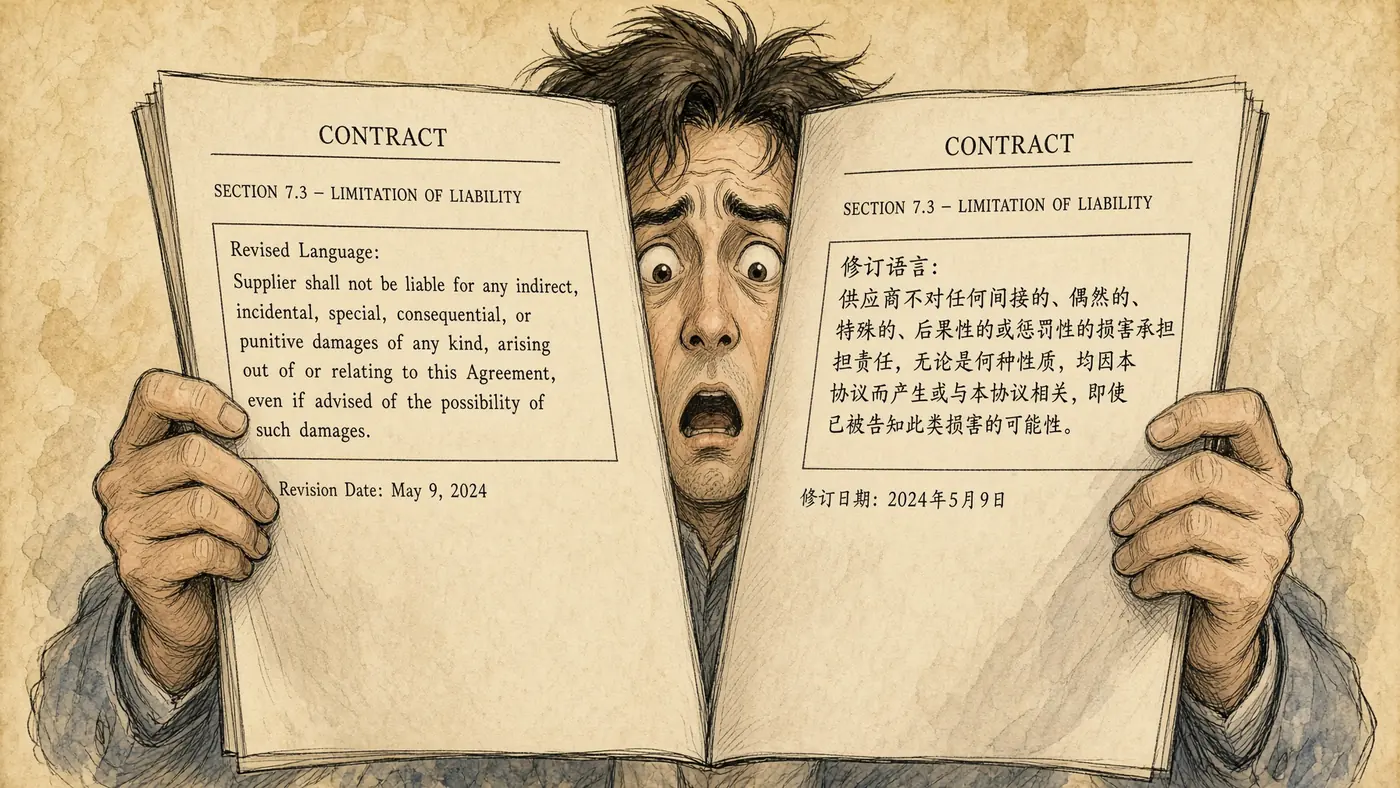
One day the API returned flawless English risk assessments. The next day, with no code or prompt changes, it returned content in Chinese. Nothing in the prompt asked for any language other than English. That is when reliability stopped being something we could take for granted.
In legal work, traceability and clarity are non-negotiable. It was not enough for the machine to revise text. The user needed to see exactly what changed: additions, deletions, modifications. Humans remain accountable for the output. Machine-assisted human decision has to be engineered on purpose.
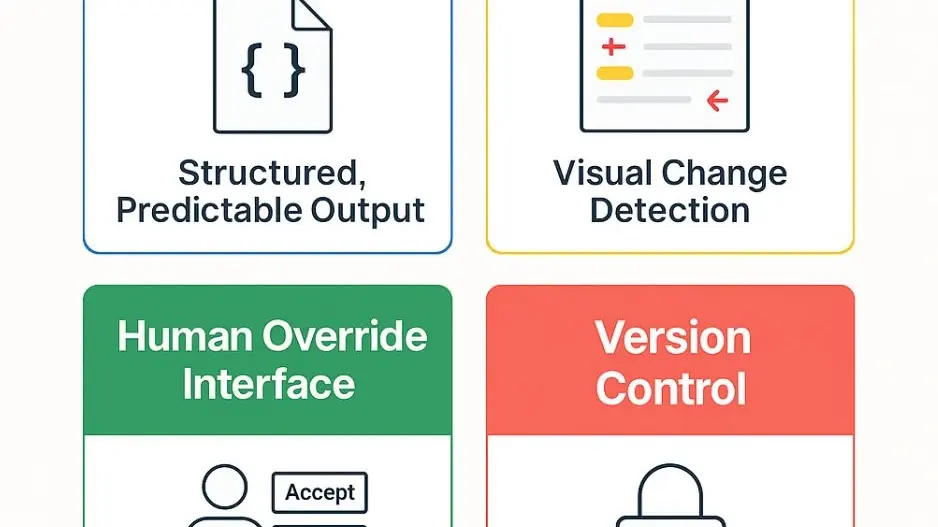
On paper the value sounds simple. Real use, especially when you want a new service rather than a faster old one, requires deliberate engineering. Recommending mitigations by revising clauses would not be possible without these models. Turning that into a production system meant four things.
- Output normalization. Require a predefined format, JSON or marked-up text, so responses stay predictable.
- A visible diff. Show changes the way a word processor shows tracked changes.
- A human override. Show what changed, where, and why, so a person can accept, reject, or edit.
- Resilience to upstream changes. Lock a model version. An update is not a guaranteed improvement.
Deploying these models in high-stakes work comes down to reliability, explainability, and execution.