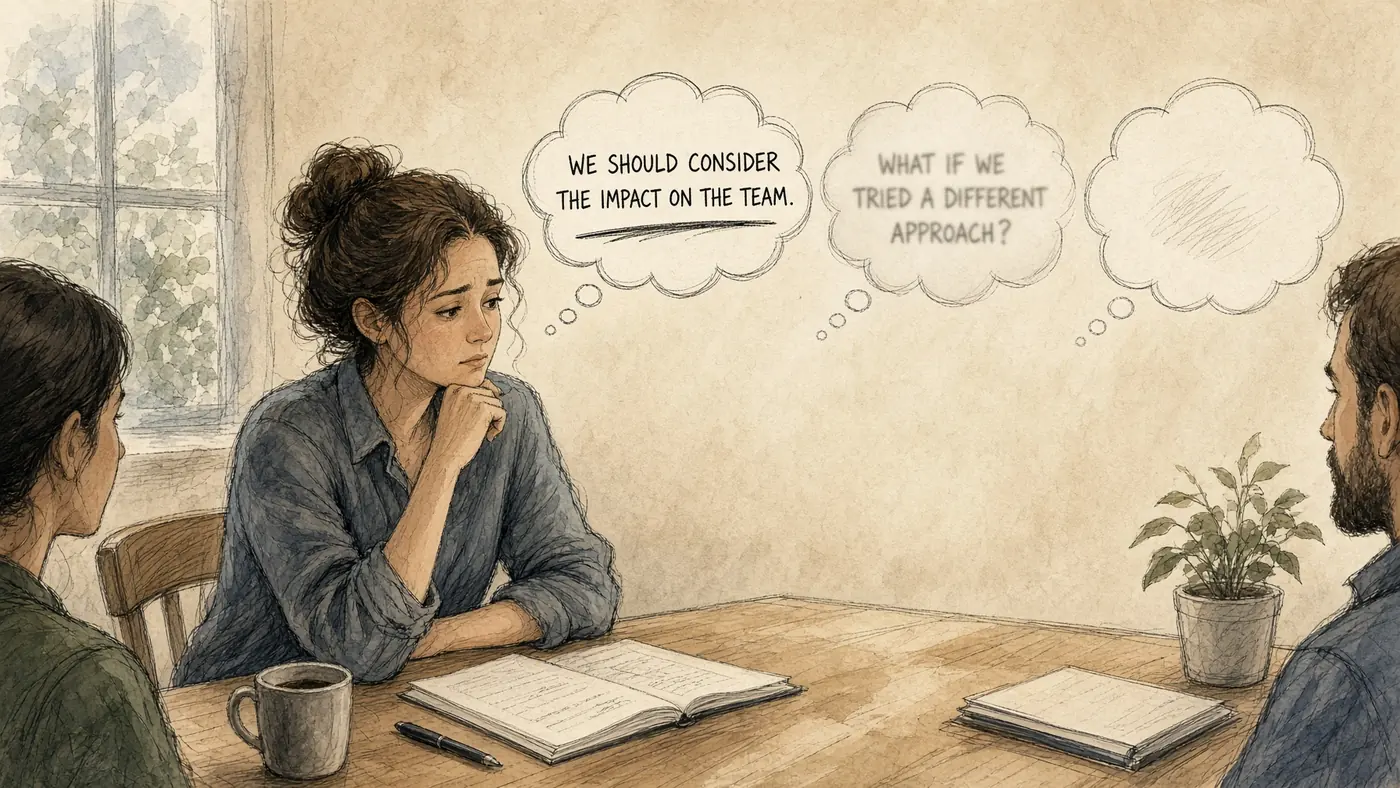
You’re in a high-stakes meeting. You can object loudly, push back softly, or say nothing. Each choice can affect your career today and months from now.
What if, before you spoke, you could simulate each option? Like a chess engine, for a conversation.
I started experimenting with this using ChatGPT. For a job interview I gave it my CV, the job description, and the company’s name. It predicted questions I had not anticipated and helped me craft answers that were sharp and relevant. It worked.
It isn’t only interviews. I asked it to analyze car damage from photos. It suggested an impact angle and a likely timeline. It caught something I missed.
So I wondered whether I could go back, not to change the past, but to learn from it. Model conversations I regret. See how they might have played out if I had said less, or more, or something else.
The point is training.
The model doesn’t need tons of data. It needs context and a sharp question. With enough of that, it can be a coach, a sparring partner, even a mirror.
Multiverse theory? Not yet. The ability to preview an outcome is already here.
Used this way, the tool doesn’t only help you answer better. It makes you sharper before you speak.