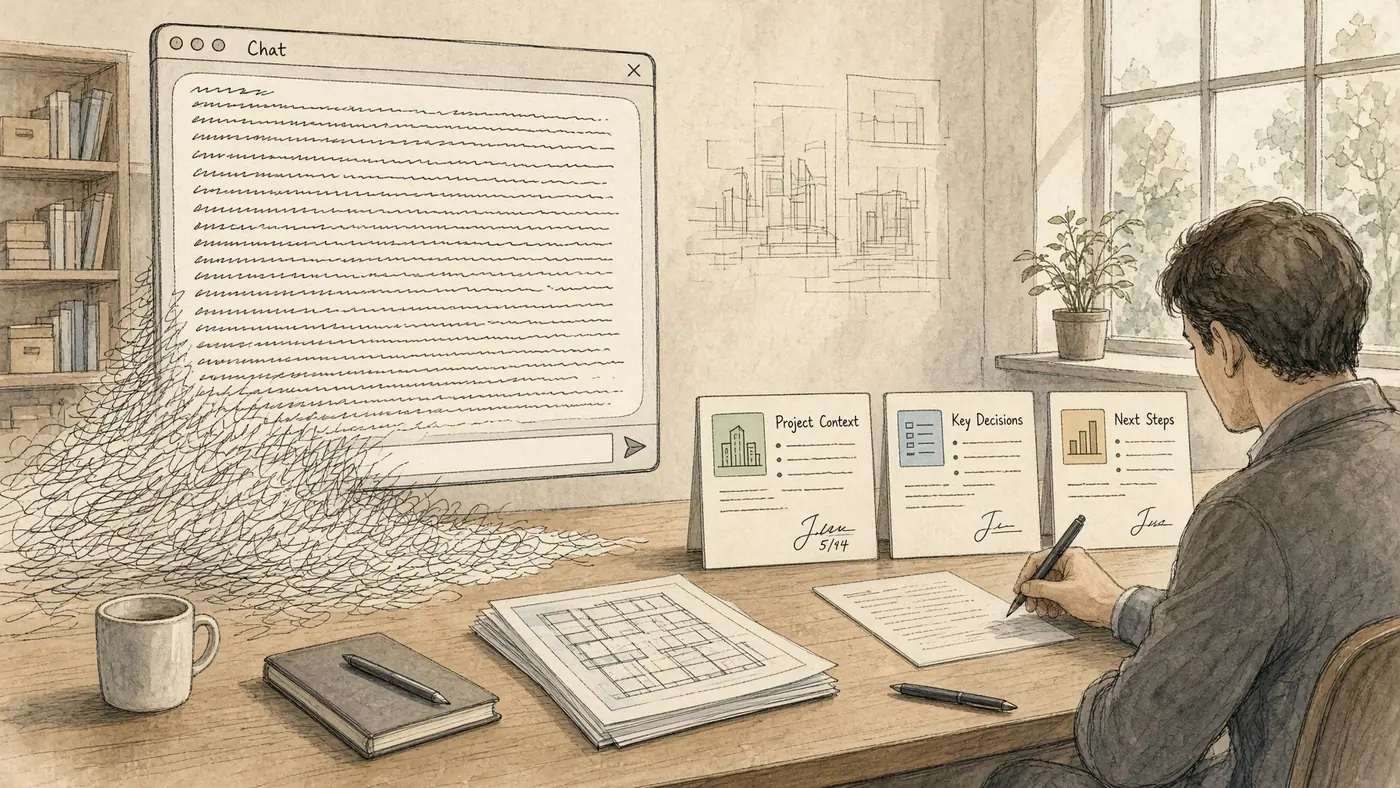
Modern machine-assisted human decision is an information architecture challenge.
Over two years I watched a steady stream of prototypes — and noise — around autonomous agents performing tasks for humans. The momentum is real. Announcements from the major players show that something large is coming.
In regulated industries, where data is money or data is life, outsourcing parts of the decision triggers legitimate concerns. Relying only on human judgment is not safe either.
The question is how far to use machine assistance, and how much a human can still validate.
Take a chat, or a coding assistant. The tools are powerful. The information firehose is overwhelming. I ask for a small code tweak and I am staring at verbose explanations, long outputs, or a command trying to execute itself. That last one happened. It was not pleasant.
What is missing is intent awareness. What is missing is progressive disclosure. What is missing is coherence.
Jobs and Gates said, more than a decade ago, that taking data from all these different places and making it available in a coherent way is incredibly powerful, and really hard. With AI the challenge is harder, because the data and the actions can be infinite.
So three things follow.
- Design interfaces that let us validate chunks of information, not a whole wave. The chat has shown its limits. The way information is displayed has to be reinvented.
- Become better delegators. More time will go to reviewing than to doing, which means being precise about the critical parts, not rereading the whole thing every time.
- Keep a trace of accountability. If we cannot, there is no reason to pay a human to do the job.
Information architecture will be one of the critical levers in change management over the next few years.