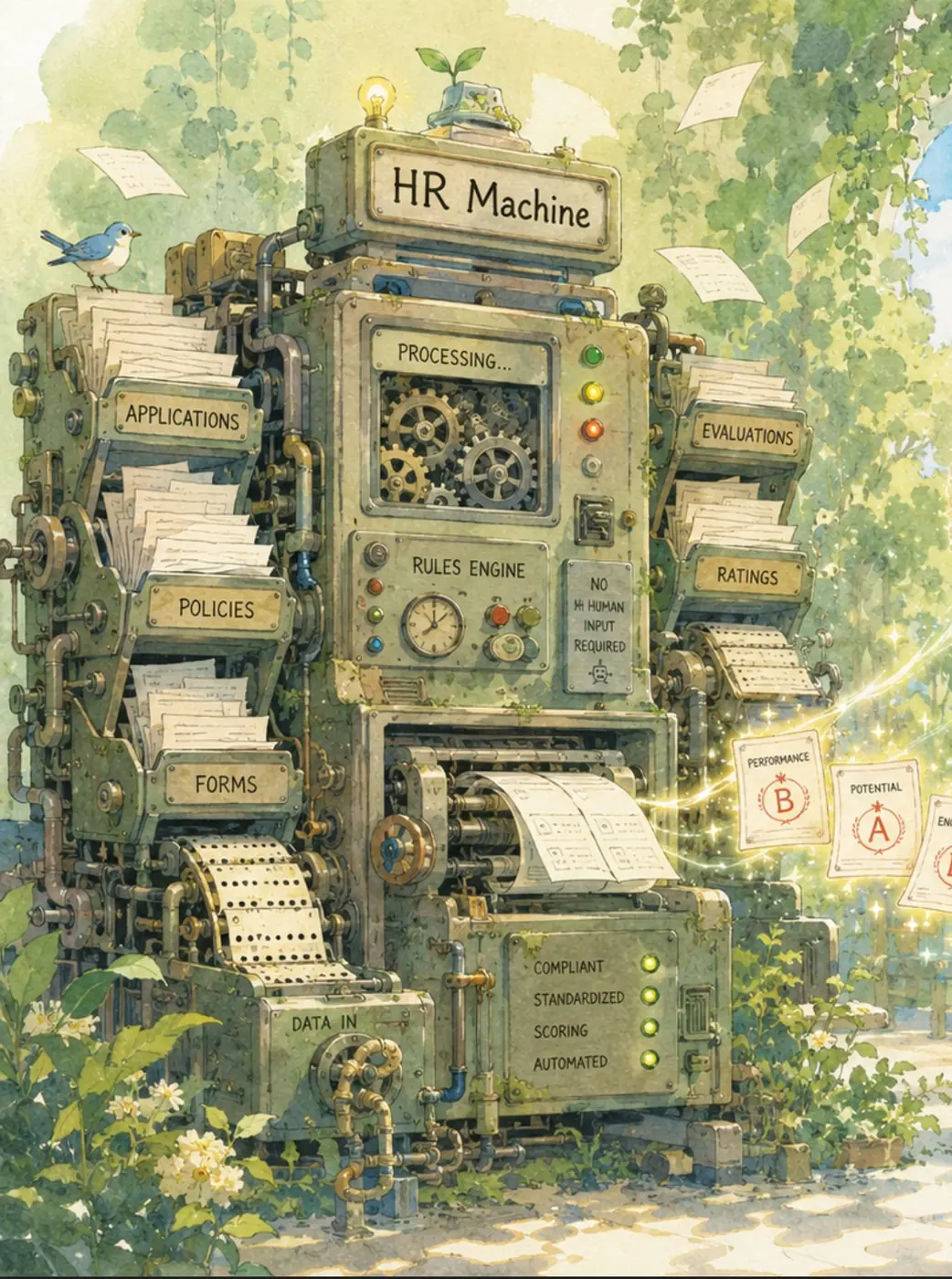
Most current “AI-powered” HR tools for career management and performance evaluations are optimizing the wrong thing.
Many of them are very good at one task: helping employees turn self-reported objectives, achievements, and development areas into polished text, suggested metrics, or ambitious-sounding goals.
That can feel productive. If the output still feeds a process that managers skim, HR archives, and few people reference when making promotion, compensation, or role decisions, then we have not improved the system. We have made low-value administrative work faster.
What would it take for AI-augmented HR systems to create real value for both employees and organizations? Three shifts matter.
From self-reporting to evidence
Instead of asking employees to recreate their year from memory, AI should help synthesize verifiable signals: project outcomes, peer feedback, stakeholder input, delivery metrics, demonstrated skills. The employee’s role should be to validate, contextualize, and correct the synthesis — not perform creative writing.
From one-sided forms to a shared view
One missed opportunity is giving employees and managers access to a common, permissioned view of performance signals. Not surveillance. Not raw activity tracking. Not black-box scoring. Synthesized insights both sides can see: where the impact actually sits, where stakeholders agree, where a development gap keeps showing up. When both sides see the same evidence, the conversation becomes less subjective and more diagnostic.
From generic goals to a development contract
The highest-value use is turning past performance into forward-looking recommendations. What skills does this person need for the next step? Which roles fit what they have already demonstrated? What should the manager and the organization commit to providing?
That changes the review from a backward-looking rating into a development contract. Humans stay responsible for judgment, context, and accountability.
Aim at the quality, transparency, and actionability of the information that actually shapes career decisions.