Frustrated by the ending of Game of Thrones? Let’s redo it our way.
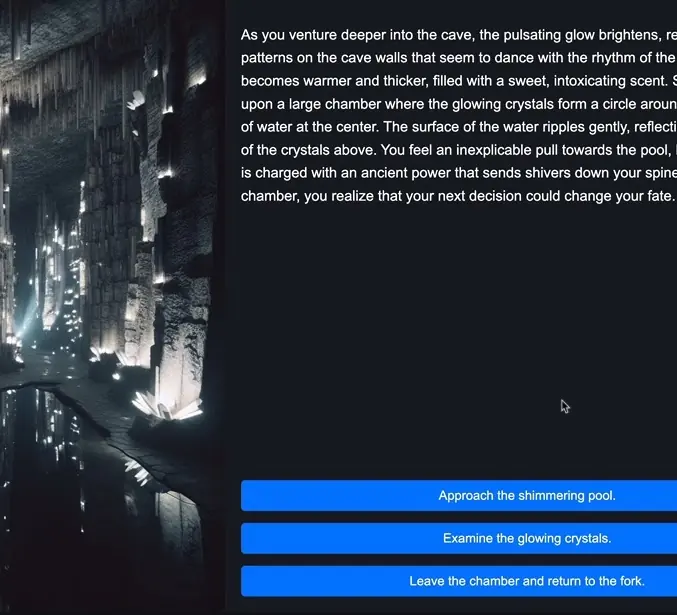
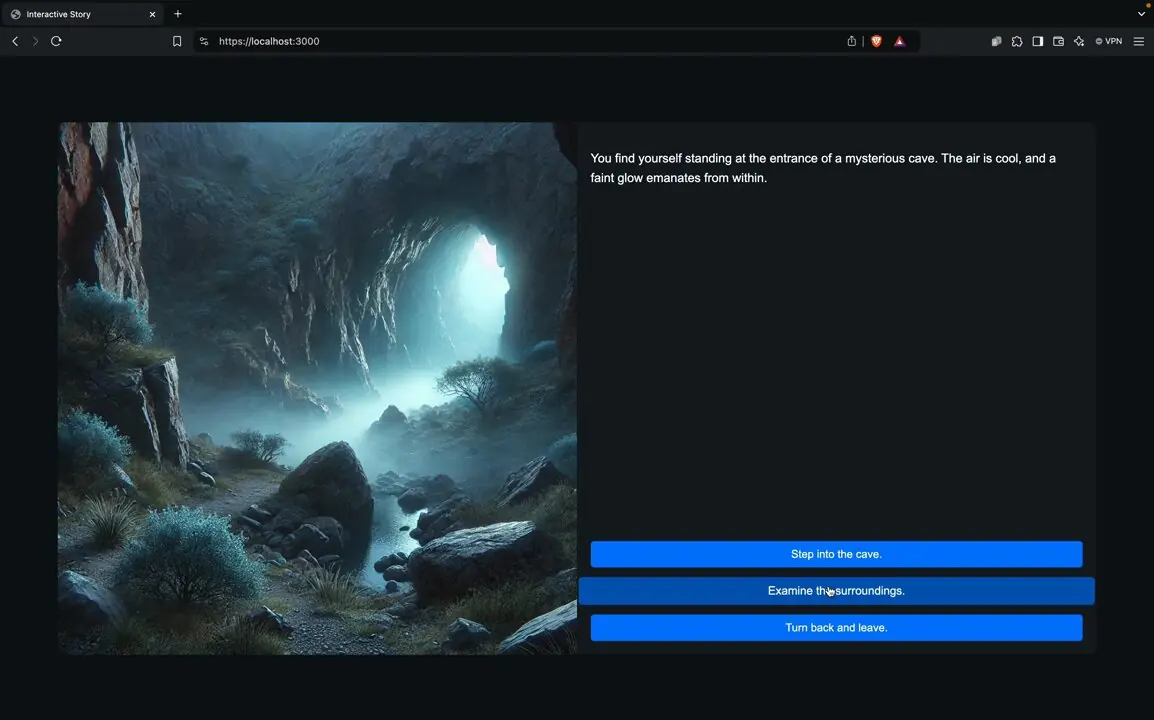
I experimented with an extremely simple video game, inspired by the choose-your-own-adventure books I read decades ago. The difference is that everything is generated at each step: the story, the choices, the voiceover, the illustrations, and the music — which I removed, for reasons below.
I had seen the claims, on YouTube and on LinkedIn, that people were creating complex software very simply. Games are part of that phenomenon. They are art and engineering, in a market that ships thousands of new titles.
What I wanted to show is that you can now create a story that never ends.
If simple games are this easy, what is the value? It goes back to a line from Elon Musk: learning should be as close as possible to video games. Combine the models with people who know a subject, and a lot of teaching could feel like play. Real learning still means doing and practicing. Clicking, sometimes at random, has a limit. The hard part is taking practice beyond the screen.
I used only OpenAI’s tools. An orchestrator sets the situation. Other calls generate the assets. One component was a complete failure: music. I assumed the APIs could at least transcribe known pieces into MIDI, which has been easy to manipulate for decades. Even simple melodies were not reproduced accurately. I gave up on original composition.
Consistent characters were the other failure. The advice I found was either very complex or already outdated, so I dropped it. You also need some engineering to put the pieces together. Each transition is slow because it is generated on the spot. A buffer would pre-generate them. That is more implementation, and more API cost.
Games, like any software, are never finished. Generating everything may not make sense unless you are willing to spend heavily. It still takes strong creative direction, however much the model lifts.
This is another shift in how we meet content, close to chat and to retrieval: people skip reading a document front to back and query it for what they need. The balance that matters is between what the model generates and what a person still curates, so the quality holds and the cost does not.